
If you are a small business owner trying to figure out what a website should cost in 2026, the honest answer is: it depends on what you actually need.
Prices range from $0 if you build it yourself on a free platform to $50,000 or more for a fully custom enterprise build. Most small businesses fall somewhere in the middle. This post breaks down every option honestly so you can make an informed decision without getting oversold.
The Quick Answer
DIY website builder (Wix, Squarespace):   $0 to $50 per month
Freelance web designer:                   $500 to $5,000 one time
Small web design agency:                  $3,000 to $15,000 one time
Large agency or full custom build:        $15,000 to $50,000 plus
Ongoing maintenance and hosting:          $50 to $500 per month
Most small service businesses, roofers, photographers, cleaners, consultants, and restaurants spend between $1,500 and $5,000 for a professional website built by a freelancer or small agency.
Option 1: Build It Yourself With a Website Builder
What It Costs
Wix:           Free plan available. Paid plans from $17 per month.
Squarespace:   From $16 per month. No free plan.
Webflow:       From $14 per month for basic sites.
WordPress.com: Free plan available. Paid from $9 per month.
Shopify:       From $29 per month for ecommerce.
What You Get
A drag-and-drop editor, a selection of templates, hosting included, and a basic contact form. Most builders include a free SSL certificate and mobile-responsive design.
The Honest Tradeoffs
Pros:
Low monthly cost
No technical knowledge required
Fast to launch
Good enough for very simple sites

Cons:
Takes significant time to learn and build
Templates look generic
Limited customisation without coding
Contact forms are basic with no lead tracking
SEO is harder to control
Wix and Squarespace URLs look unprofessional
unless you pay for a custom domain
Who This Is Right For
DIY builders work well for very simple informational sites where you just need a web presence. If you need customers to find you through Google and contact you regularly, a DIY builder is usually not enough on its own.
Option 2: Hire a Freelance Web Designer
What It Costs
Entry level freelancer:       $500 to $1,500
Mid level freelancer:         $1,500 to $5,000
Senior freelancer:            $5,000 to $10,000
Prices vary significantly based on location. A freelancer in the US or UK charges more than a freelancer in Eastern Europe, Africa, or Asia. The quality gap is smaller than the price gap.
What You Get
A custom-designed website built to your specifications. Usually includes 5 to 10 pages, a contact form, basic SEO setup, and mobile-responsive design. The freelancer handles the technical work so you do not have to.
The Honest Tradeoffs
Pros:
More customised than a website builder
Faster than learning to build it yourself
Usually better SEO foundation
More professional result

Cons:
Quality varies significantly between freelancers
No guarantee of ongoing support after launch
Communication can be difficult across time zones
Contact forms are often basic
with no lead tracking built in
What to Watch Out For
The cheapest freelancers on platforms like Fiverr often deliver template-based sites that look similar to everyone else in your industry. A $300 website rarely looks like a $300 website is worth paying for.
Ask to see their portfolio before paying anything. Ask specifically whether past clients have seen enquiries from their website after launch.
Option 3: Hire a Small Web Design Agency
What It Costs
Small local agency:           $3,000 to $8,000
Established small agency:     $8,000 to $15,000
Specialist niche agency:      $10,000 to $20,000
What You Get
A more structured process than a freelancer. Dedicated project management. Usually includes discovery, design mockups, development, content guidance, and post-launch support. Many agencies also offer ongoing maintenance plans.
The Honest Tradeoffs
Pros:
More reliable process and communication
Better accountability than solo freelancers
Often includes SEO strategy
Post-launch support included

Cons:
Significantly more expensive
Longer timeline, usually 6 to 12 weeks
Still often delivers a basic contact form
with no lead management system
Ongoing retainers add up quickly
The Gap Most Agencies Do Not Fill
Even at $8,000 to $15,000, most agency-built websites still deliver a basic contact form that sends enquiries to your inbox. There is no system for tracking which leads you followed up on, which ones converted, or which marketing channels are sending real paying customers.
You pay for a professional website. You do not always pay for a lead system. Those are different things.
Option 4: Full Custom Development
What It Costs
Custom web application:       $15,000 to $50,000 plus
Enterprise level build:       $50,000 to $500,000 plus
Who This Is For
Custom development is for businesses with complex requirements: ecommerce with custom logic, booking systems with payment integration, membership platforms, or web applications that do more than display information.
Most small service businesses do not need this. If you are a roofer, photographer, restaurant, or local service business, a custom build at this price point is rarely the right answer.
What Affects the Price
Number of Pages
A 5-page website costs significantly less than a 20-page website. Most small businesses need: Home, About, Services, Contact, and maybe a Gallery or Blog. That is 5 to 6 pages. You do not need more to start.
Design Complexity
A site built from a template costs less than a fully custom design. For most small businesses, a well-implemented template looks professional enough and converts just as well as a custom design.
Functionality Required
Basic contact form:              Low cost
File upload with form:           Slightly higher
Booking and appointment system:  Higher
Ecommerce with payments:         Significantly higher
Custom web application:          Highest
Content
Many web designers charge extra if you do not provide your own text and images. Writing copy and sourcing photography adds $500 to $2,000 to most projects.
Ongoing Maintenance
A website is not a one-time purchase. Budget for:
Hosting:                    $10 to $50 per month
Domain renewal:             $10 to $20 per year
SSL certificate:            Often included with hosting
Plugin or software updates: $50 to $200 per month
if on a maintenance plan
Content updates:            $50 to $150 per hour
if done by your designer
What Most Small Businesses Actually Spend
Based on what small business owners discuss in communities like Reddit's r/smallbusiness and r/web_design, here is what most people actually end up spending:
Trades and service businesses
(roofers, plumbers, electricians):     $1,500 to $4,000

Professional services
(accountants, lawyers, consultants):   $2,000 to $6,000

Restaurants and hospitality:           $1,500 to $5,000

Photographers and creatives:           $1,000 to $4,000

Ecommerce small shops:                 $3,000 to $10,000
These are one-time build costs. Ongoing hosting and maintenance add $50 to $300 per month depending on your setup.
The Question Most People Forget to Ask
The most common complaint from small business owners after paying for a website is not that it looked bad. It is that it did not generate business.
"We paid $4,000 for a website
and barely get any enquiries from it."
This happens for two reasons.
First, a website without ongoing SEO or marketing does not automatically appear in Google searches. Getting traffic requires either paid ads or organic SEO, which takes 3 to 12 months to build.
Second, even when visitors arrive, most websites have no system for capturing and following up on leads. A contact form that sends emails to your inbox is not a lead system. It is just an email. Leads get buried. Follow-ups do not happen. Potential customers hire someone else.
Before paying for a website, ask the designer or agency what happens to enquiries after someone submits the contact form. Most will describe an email notification. The best ones will describe a complete lead tracking system.
How to Get the Most From Your Website Budget
Start With Clear Goals
Before talking to any designer, write down what you want your website to do. Not how it should look. What it should do.
Generate quote requests from homeowners in my area
Book photography consultations
Take restaurant reservations
Capture contractor job applications
A designer who knows your goal can build toward it. A designer who just knows you want a website will build something generic.
Prioritise the Contact Flow
The most important part of any small business website is how it handles enquiries. Your contact form should:
Notify you instantly when someone submits
Store every enquiry somewhere you can review
Make it easy to follow up without
hunting through your email inbox
Tell you where the enquiry came from
Most websites do not do any of these things well. Ask about this before you sign anything.
Get References From Past Clients
Do not just look at portfolio screenshots. Ask to speak with one or two past clients. Ask them specifically whether the website has generated business, not just whether it looked good.
Avoid Paying for Things You Do Not Need
You probably do not need:
A custom logo in the web design budget
(hire a separate brand designer)

Animated hero sections
(rarely improves conversion)

Social media management bundled in
(usually overpriced and underdelivered)

A 20-page website on day one
(start with 5 pages and expand)
The Hidden Cost Most Estimates Leave Out
Almost every website cost estimate leaves out the cost of lead capture and follow-up.
A professional website that generates enquiries is only valuable if you can capture, track, and follow up on those enquiries reliably. Without a system for that, you are paying $3,000 to $15,000 for a digital brochure that sits on the internet and occasionally sends you an email you might miss.
The businesses that get real return from their website investment are the ones that treat lead capture as part of the build, not an afterthought.
Summary: What to Budget in 2026
Minimal presence (DIY):
$200 to $600 per year
Good enough for very basic needs
Not good for generating business

Professional freelancer built site:
$1,500 to $5,000 one time
plus $100 to $300 per year ongoing
Right for most small service businesses

Small agency built site:
$5,000 to $15,000 one time
plus $200 to $500 per month ongoing
Right for established businesses
wanting a stronger brand presence

Full custom build:
$15,000 and up
Right for complex requirements only
Budget an additional $500 to $1,500 for a proper lead capture and follow-up system regardless of which option you choose. That single addition usually generates more return than doubling your design budget.
Need a Website With Lead Capture Built In From Day One?
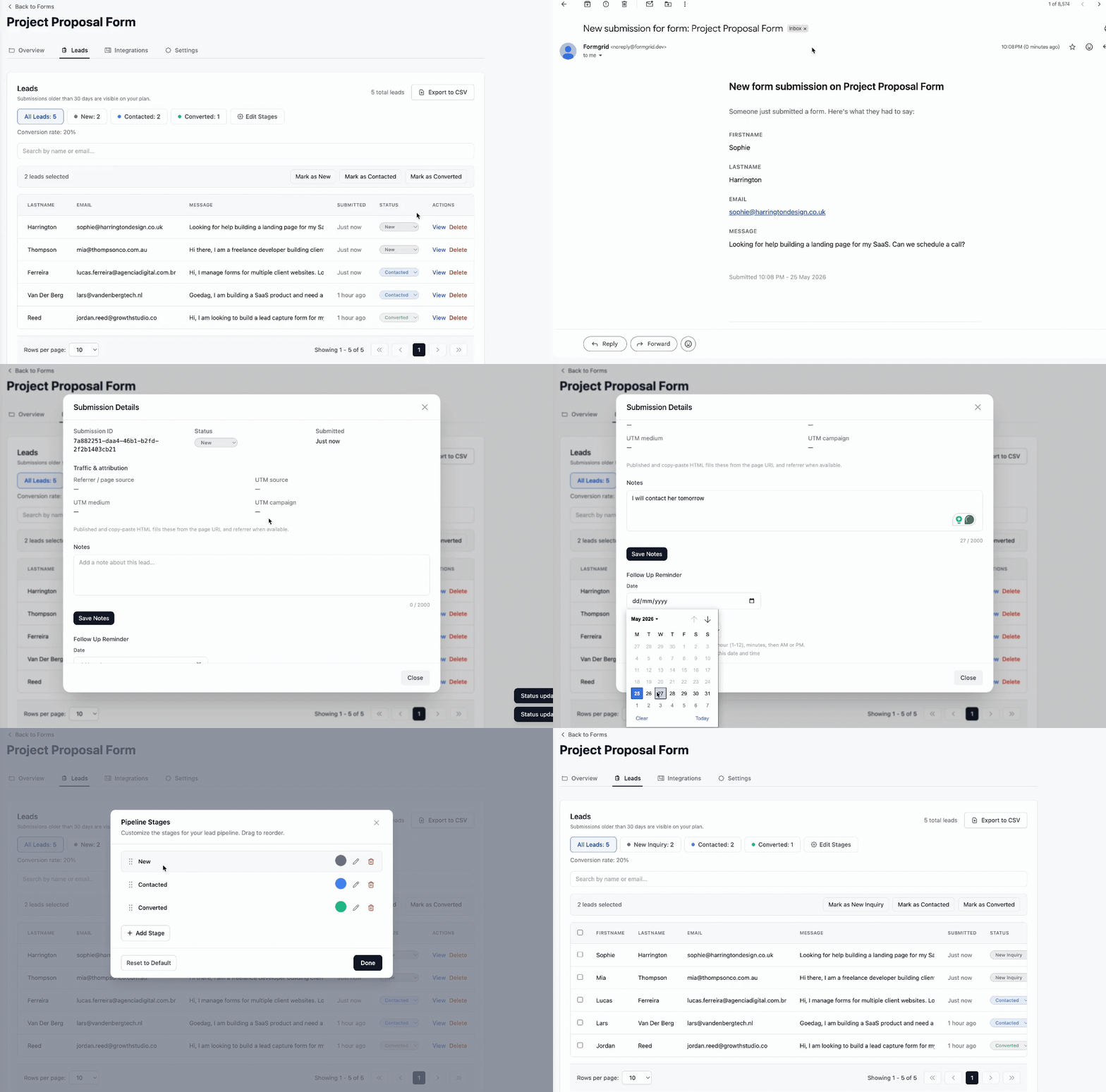
If you want a professional website for your service business that includes a quote request form, Google Sheets sync so your team sees new leads in real time, UTM tracking so you know which ads send real paying customers, and a lead pipeline with follow-up reminders, I offer done-for-you setups starting at $500.
Every enquiry your website generates becomes a tracked lead you can follow up on, add notes to, and move through a simple pipeline from New to Contacted to Converted.
👉 View done-for-you packages at formgrid.dev/services
Have a question about website costs for your specific business? Email allen@formgrid.dev and I will give you a straight answer.
Comments
Leave a comment