
Someone fills out your Webflow contact form. They click submit. They wait.
Nothing arrives in their inbox.
No confirmation. No acknowledgement. No "thank you, we received your message." Just silence.
They wonder if the form worked. They submit it again. You receive two identical enquiries and have no idea which one to respond to.
This is one of the most common frustrations Webflow users run into. Your form looks professional. Your site looks polished. But the moment someone submits your form, they get nothing back.
This post explains exactly why this happens, why the most commonly suggested fixes no longer work, and how to solve it completely in about 5 minutes, without Zapier, Make, or MailerSend.
Why Webflow Cannot Send Confirmation Emails to Submitters
Webflow's native form handling notifies you when someone submits your form. Not to notify them.
By default, Webflow sends an email to the address associated with your Webflow account every time a form is submitted. You can customize who receives that notification, what the subject line says, and what the body contains.
But that notification goes to you. Not to the person who submitted the form.
There is no native setting in Webflow that sends an automatic confirmation email back to the submitter the moment they fill in your form.
What Happened to Webflow Logic
For a while, there was hope that Webflow Logic would solve this. Webflow Logic was an automation feature that allowed you to build workflows triggered by form submissions, including sending emails to submitters.
Webflow Logic was discontinued on June 27, 2025.
If you have read tutorials suggesting you use Webflow Logic for auto-responder emails, those tutorials are now outdated. Webflow Logic no longer exists.
The Workaround Most People Find
After discovering that Webflow cannot do this natively, most people find the same workaround: Connect Webflow to Make Connect Make to MailerSend Build a scenario that triggers when a form is submitted Map the form fields to email variables Send the confirmation email through MailerSend
This works. But it requires: A Make account: $9 to $16 per month A MailerSend account: free to $30 per month Several hours to set up and test A dependency on three separate services that can each break independently
You are paying for multiple subscriptions and maintaining a complex integration just to send one confirmation email when someone fills in a form.
There is a simpler way.
The Simpler Solution: Replace the Webflow Form With a Formgrid Endpoint
Formgrid is an open-source form backend that works with any website, including Webflow. Instead of Webflow handling your form submissions, you point your form at a Formgrid endpoint URL.
Formgrid receives every submission, saves it to your dashboard, sends you an email notification, and automatically sends a branded confirmation email back to the person who submitted the form.
Auto-responder emails are included on the Premium plan at $12 per month. No Zapier. No Make. No MailerSend. No complex scenarios to build or maintain.
Here is exactly how to set it up.
What You Will Need
A Formgrid account: Sign up for free at formgrid.dev No credit card required Auto-responder emails are available on Premium at $12 per month A Webflow site with a form: Any Webflow form works Contact forms, enquiry forms, registration forms, booking forms A Google account (optional): If you also want submissions to land in Google Sheets automatically
Part One: Set Up Your Formgrid Form
Step 1: Create Your Formgrid Account
Go to formgrid.dev and sign up using Google or your email address. No credit card required.
The free plan lets you test the setup and receive submissions. Upgrade to Premium at $12 per month to enable auto-responder emails.
Step 2: Create a New Form
Once you are in your Formgrid dashboard, click New Form. Give it a name that matches the Webflow form you are connecting to. For example, "Contact Form" or "Booking Enquiry."
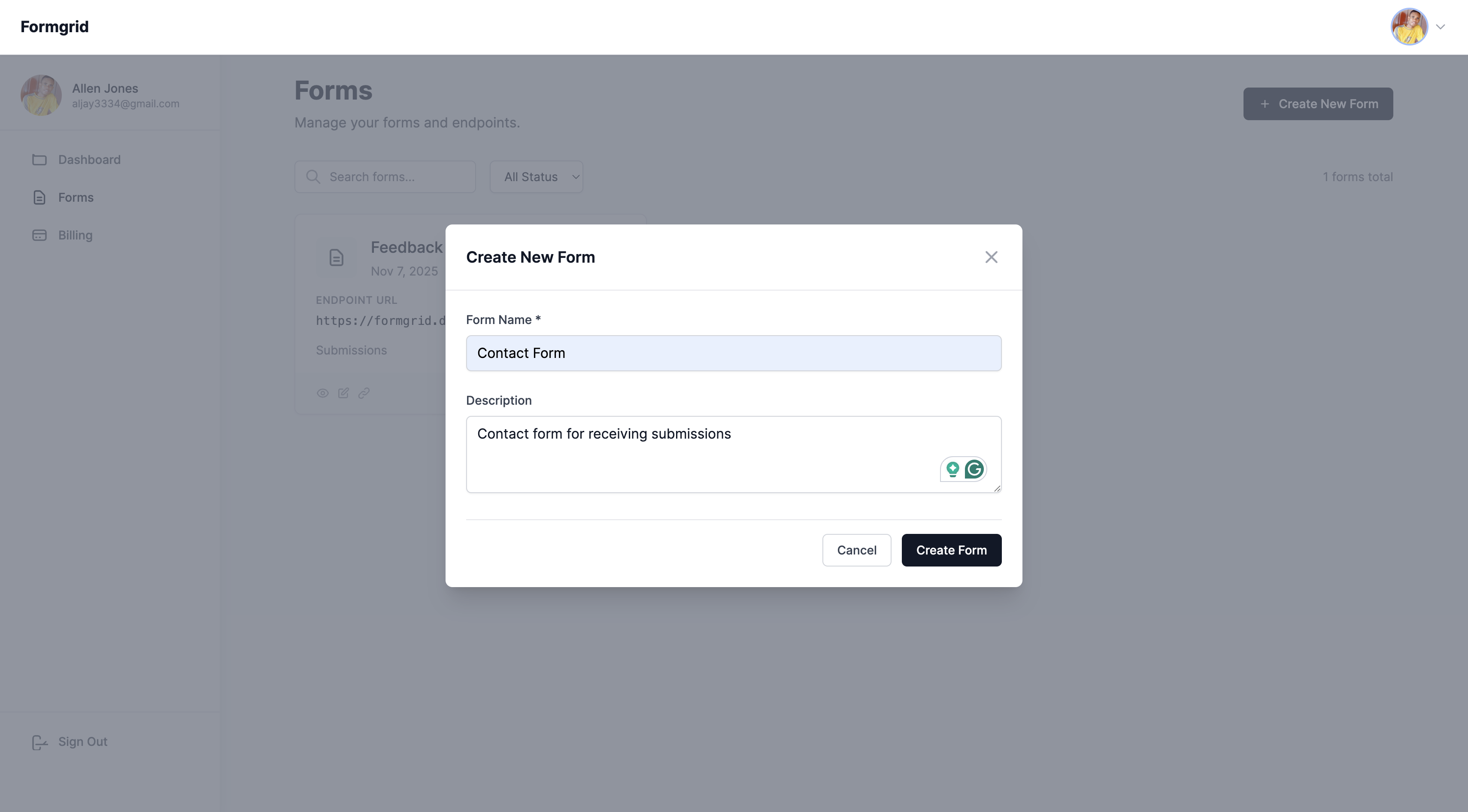
You are not building a form inside Formgrid here. You are registering a form entry in your dashboard so Formgrid knows where to route incoming submissions from Webflow. Your actual form fields stay exactly as they are in Webflow.
Step 3: Copy Your Endpoint URL
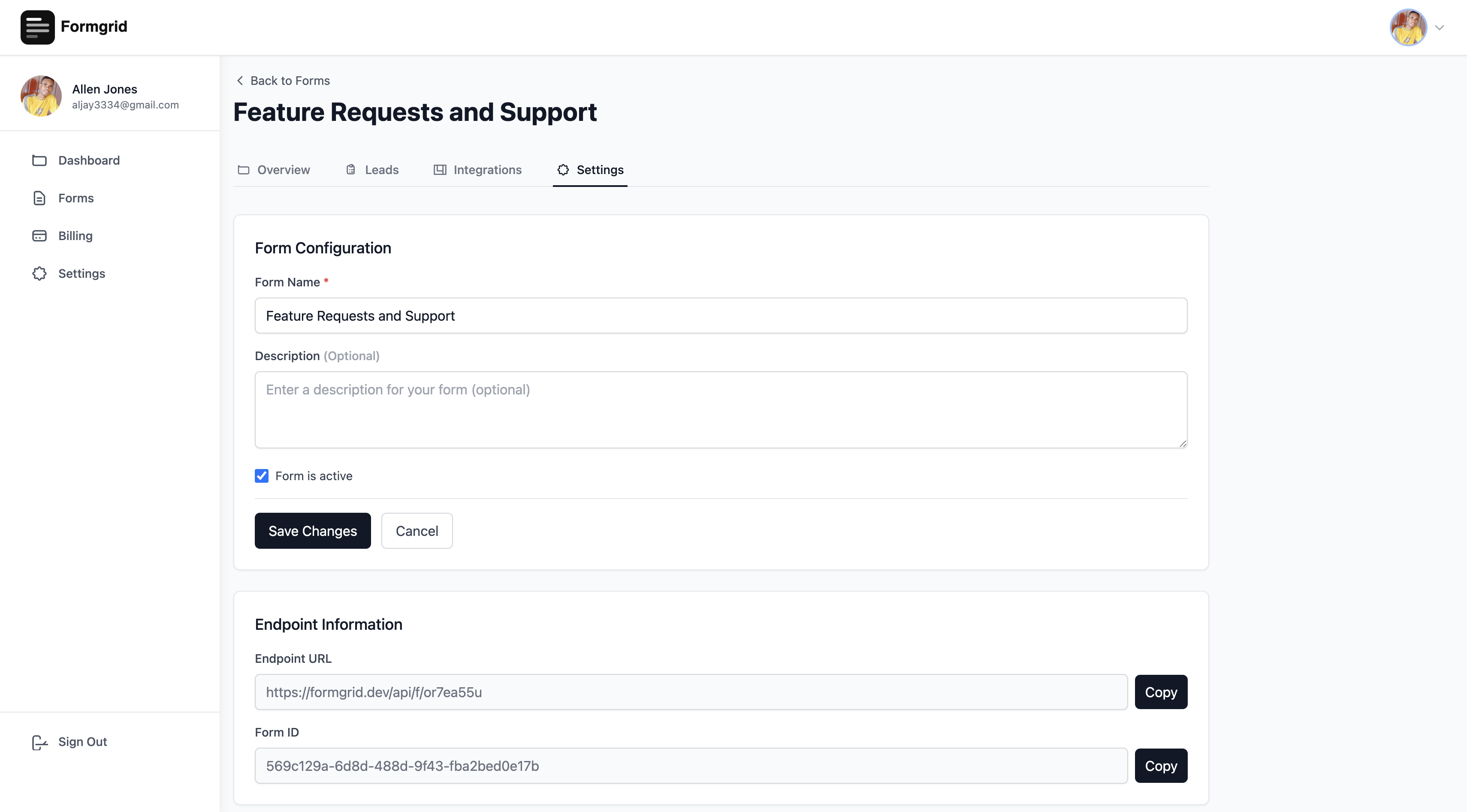
After creating your form, open it in your Formgrid dashboard. You will see your unique endpoint URL displayed prominently in the Overview tab.
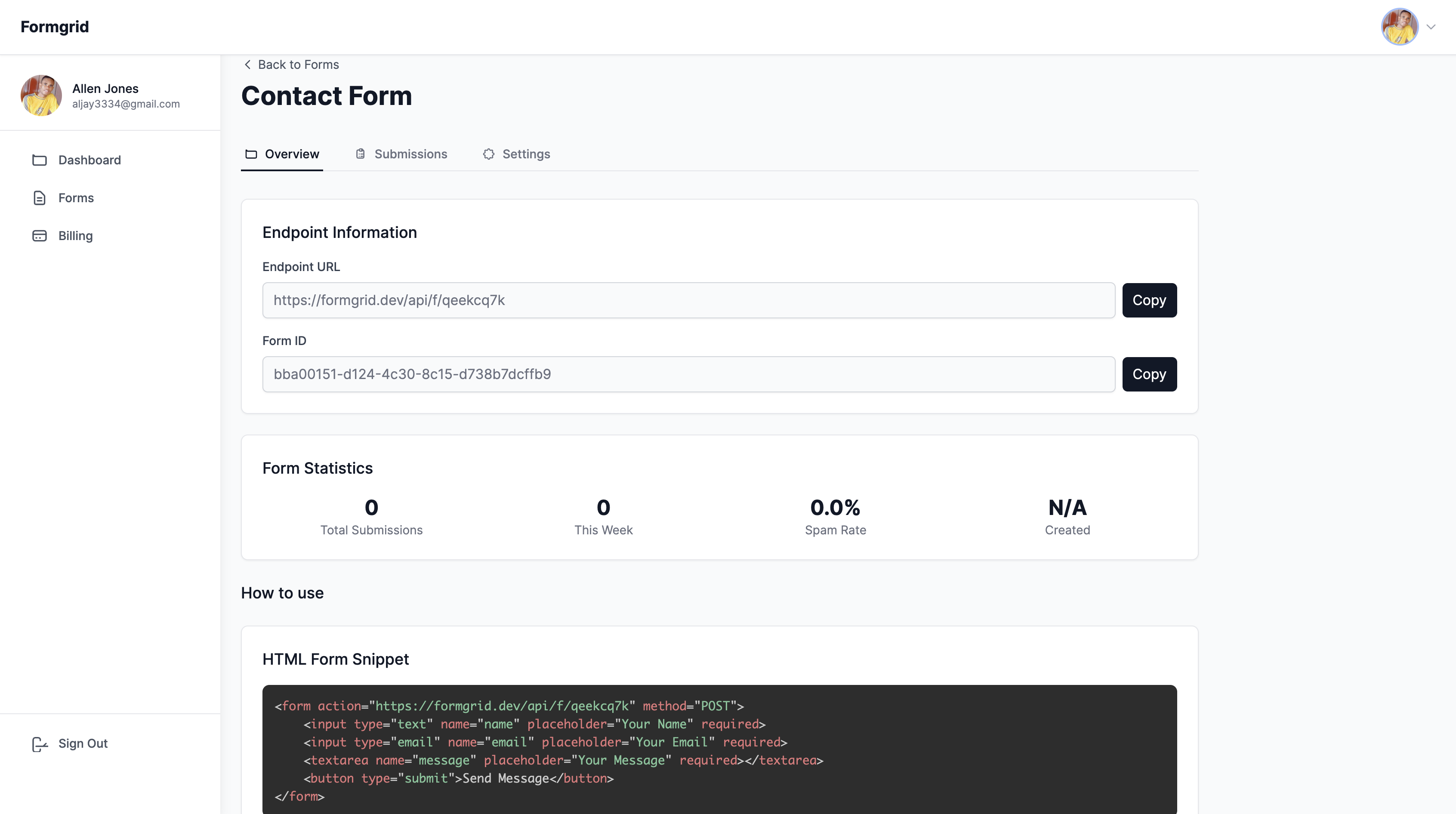
Copy this URL. You will need it in the next section when you update your Webflow form settings.
This URL is permanent. It does not change when you update your form settings, connect integrations, or make any other changes inside Formgrid. You set it once in Webflow and never need to touch it again.
Part Two: Update Your Webflow Form
Step 4: Open Your Webflow Form Settings
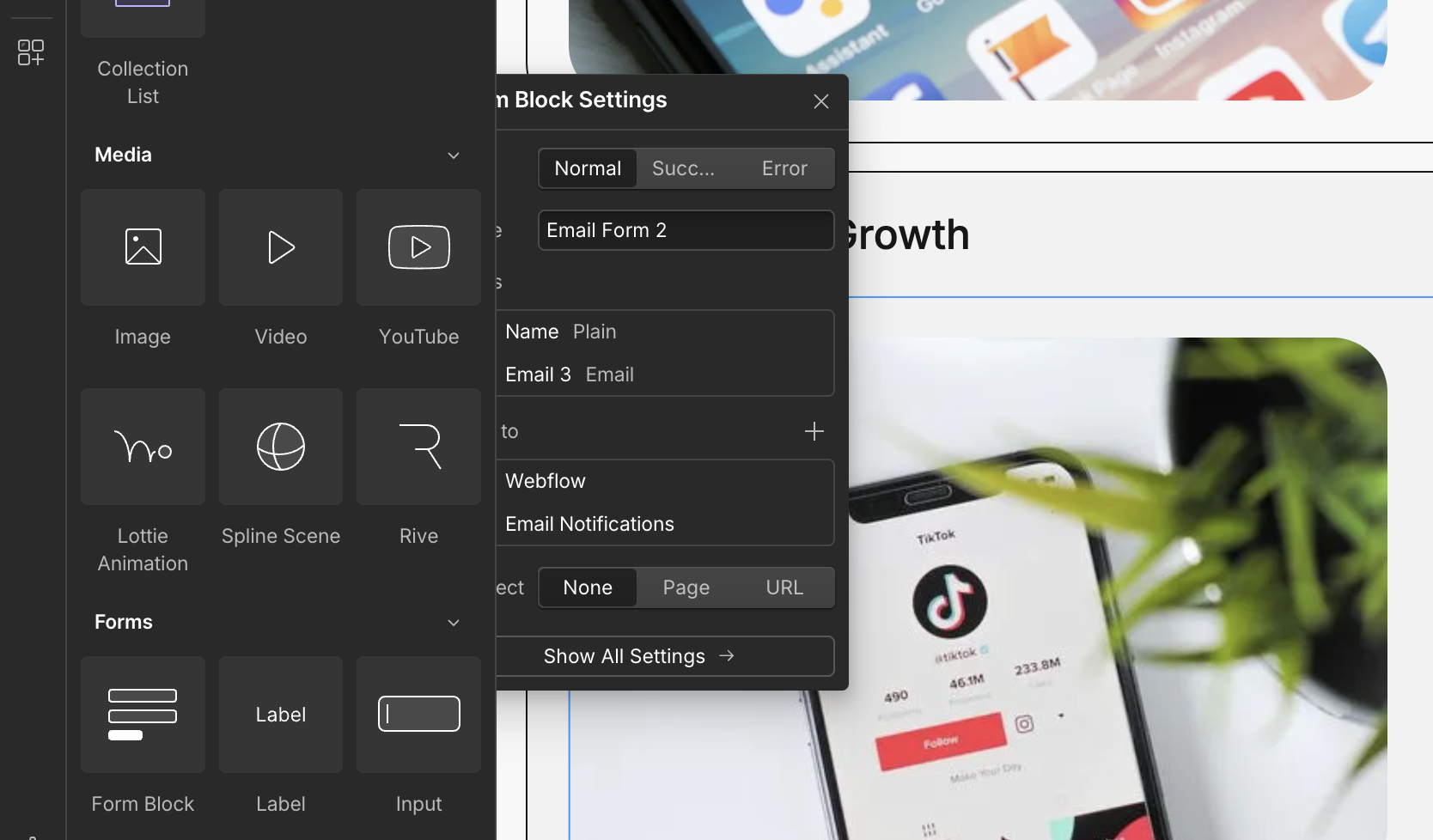
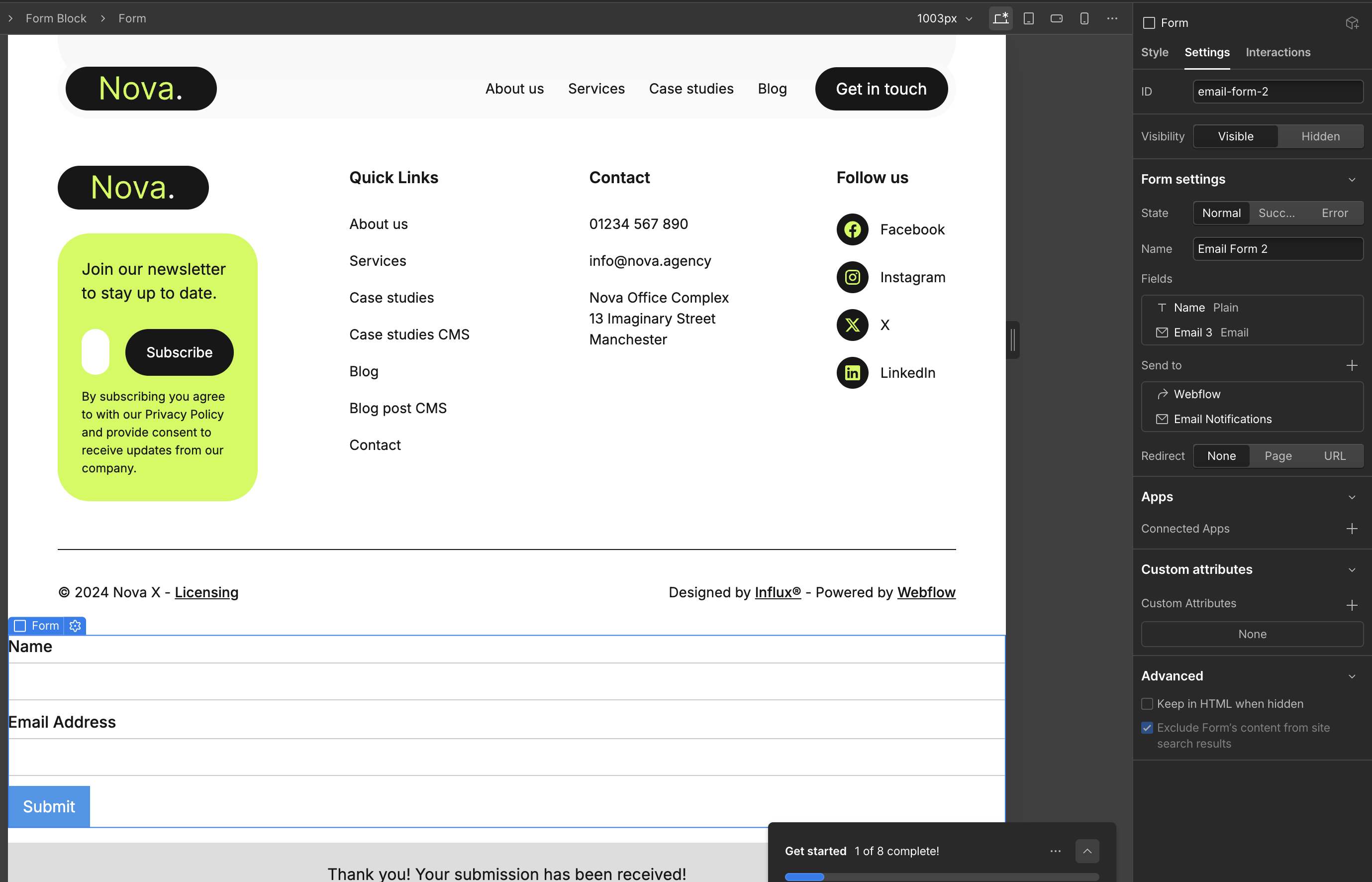
Log in to your Webflow account and open the project containing the form you want to connect. In the Webflow Designer, click on your form element to select it. Then open the form settings panel.
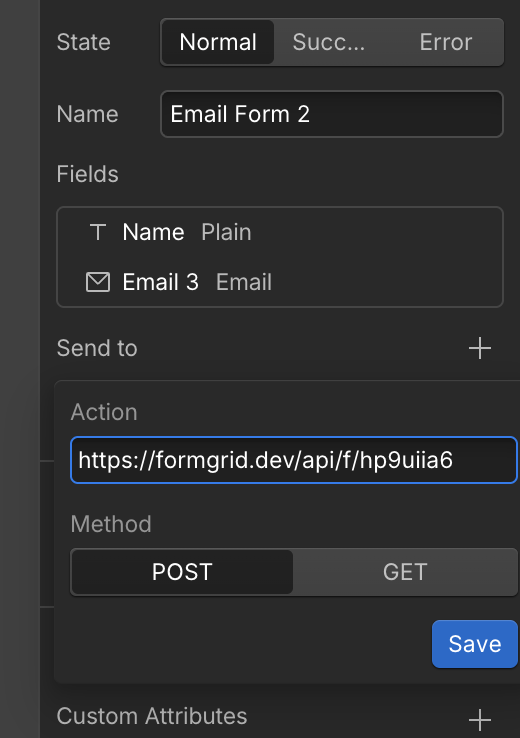
Step 5: Set the Form Action URL
In the form settings panel, locate the Action field. By default, this is either empty or set to Webflow's internal submission handler.
Replace the existing value with your Formgrid endpoint URL:
https://formgrid.dev/api/f/your-form-idSet the Method to POST if it is not already set.
Step 6: Check Your Field Names
Formgrid uses the name attribute of each form field to identify submissions and to populate variables in your auto-responder email.
In the Webflow Designer, click on each input field in your form and check the name value in the element settings panel. Make sure the email field is named "email" exactly. Formgrid uses this field to know where to send the confirmation email.
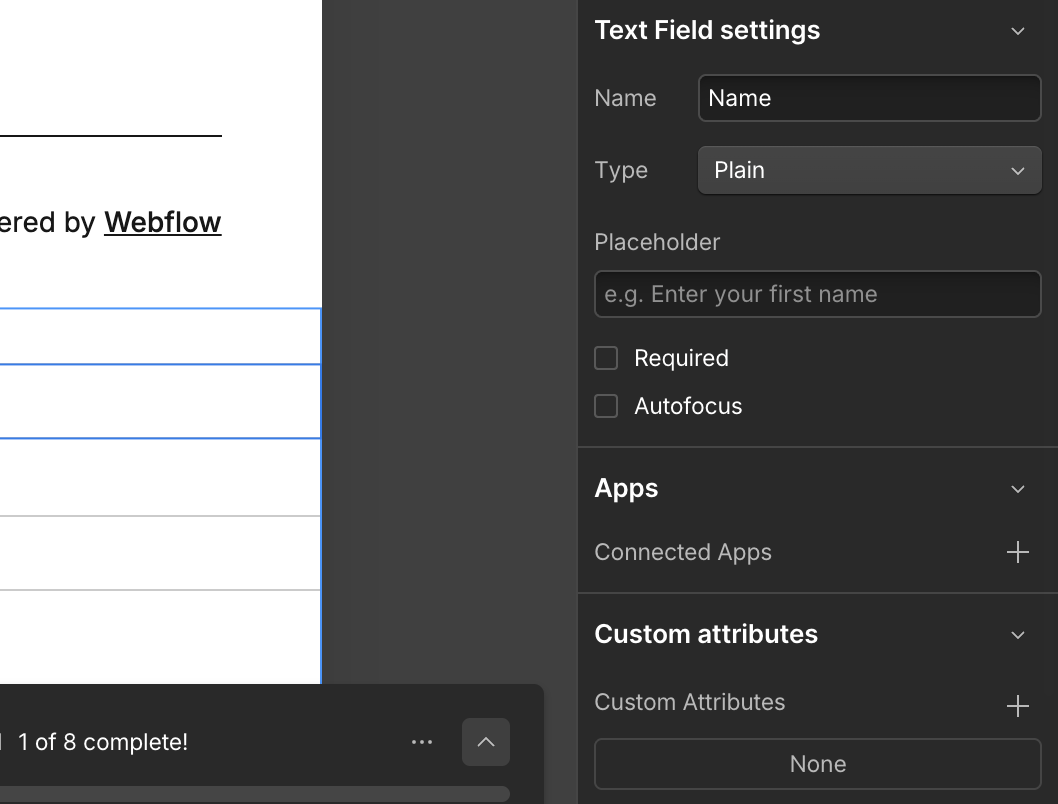
Field names like "name", "email", "phone", and "message" will produce clean, readable variables in your auto-responder template. Update any that are unclear or auto-generated by Webflow.
Step 7: Publish Your Webflow Site
Once you have updated the form action URL and reviewed your field names, publish your Webflow site to push the changes live. The Formgrid endpoint will not receive any submissions until your site is published.
Step 8: Submit a Test Entry
Before setting up the auto-responder, confirm that submissions are reaching Formgrid correctly. Visit your live Webflow site, fill in your form with test data, and submit it.
Open your Formgrid dashboard and check the submissions list for your form. The test entry should appear within a few seconds.
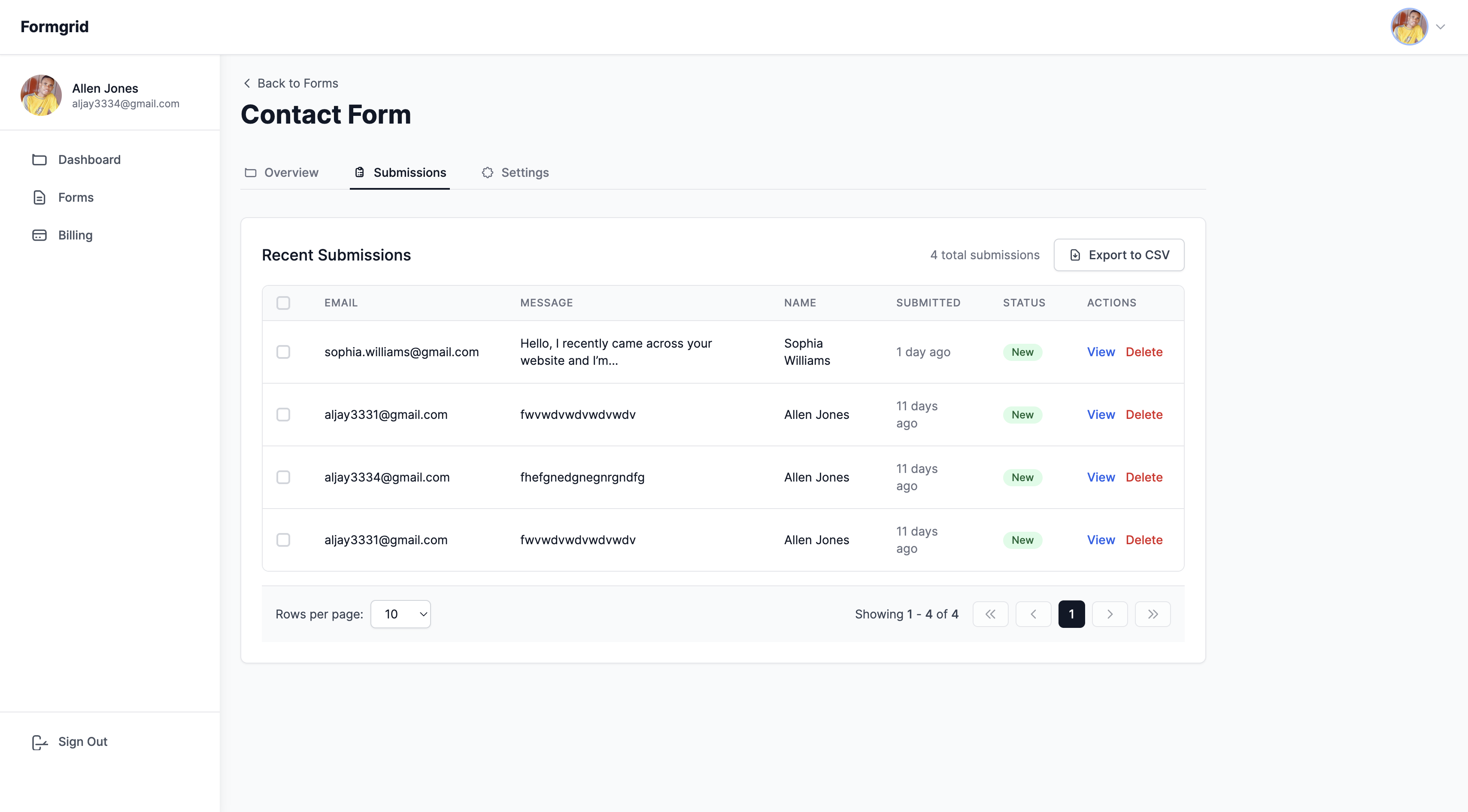
If the submission does not appear, go back to your Webflow form settings and confirm that the action URL is set correctly and that the method is POST. Also, confirm that you published the site after making the change, since unpublished changes in Webflow do not take effect on the live site.
Part Three: Set Up Auto-Responder Emails in Formgrid
This is where Formgrid replaces the entire Webflow + Make + MailerSend workflow. Auto-responder emails are built directly into Formgrid. No external services required.
Step 9: Open Your Form Settings
In your Formgrid dashboard, open the form you just connected and click the Settings tab at the top of the page.
Step 10: Find the Auto-Responder Section
Scroll down to the Auto-Responder Emails section. If you are on the Premium plan at $12 per month, you will see the full auto-responder configuration. If you are on the free plan, you will see a prompt to upgrade.
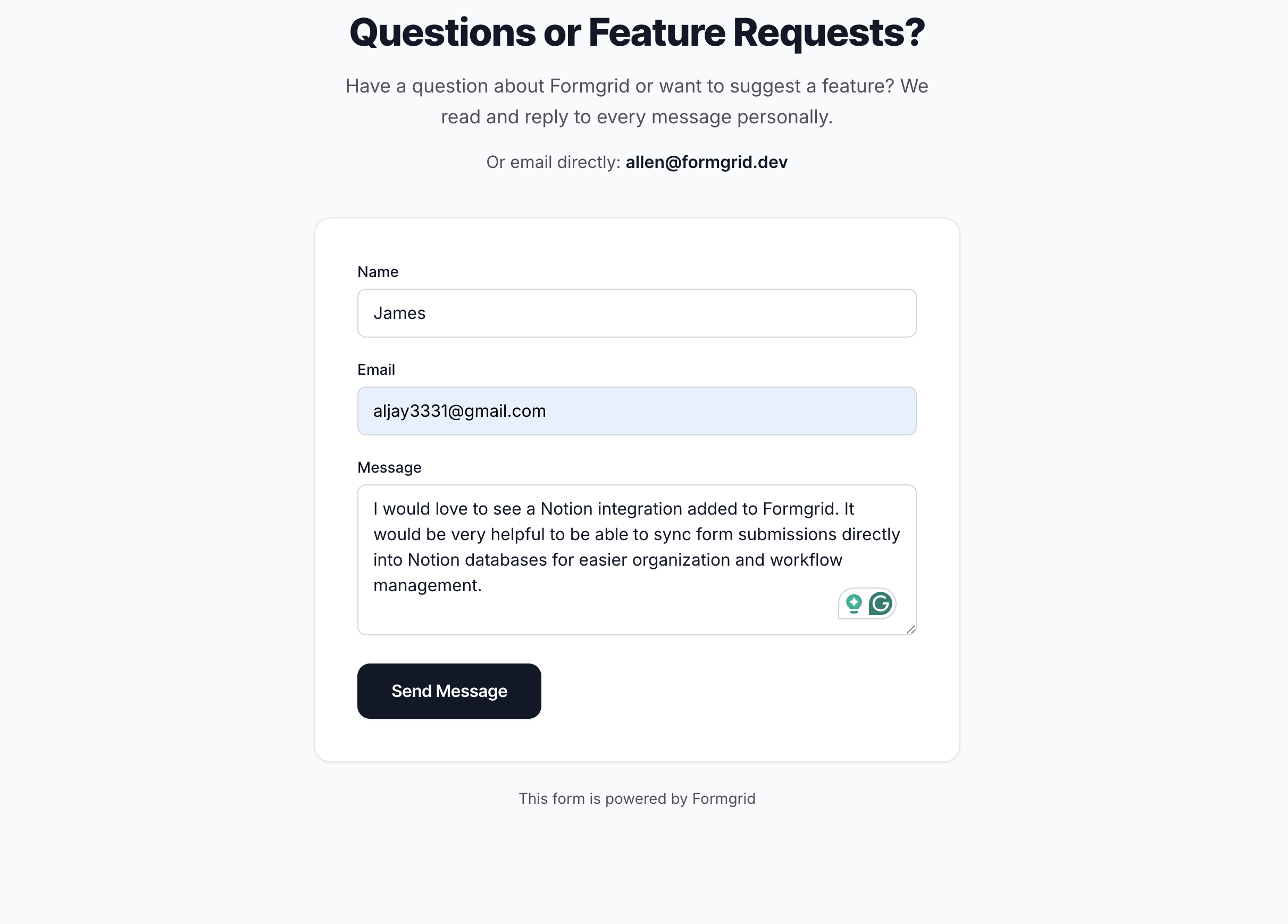
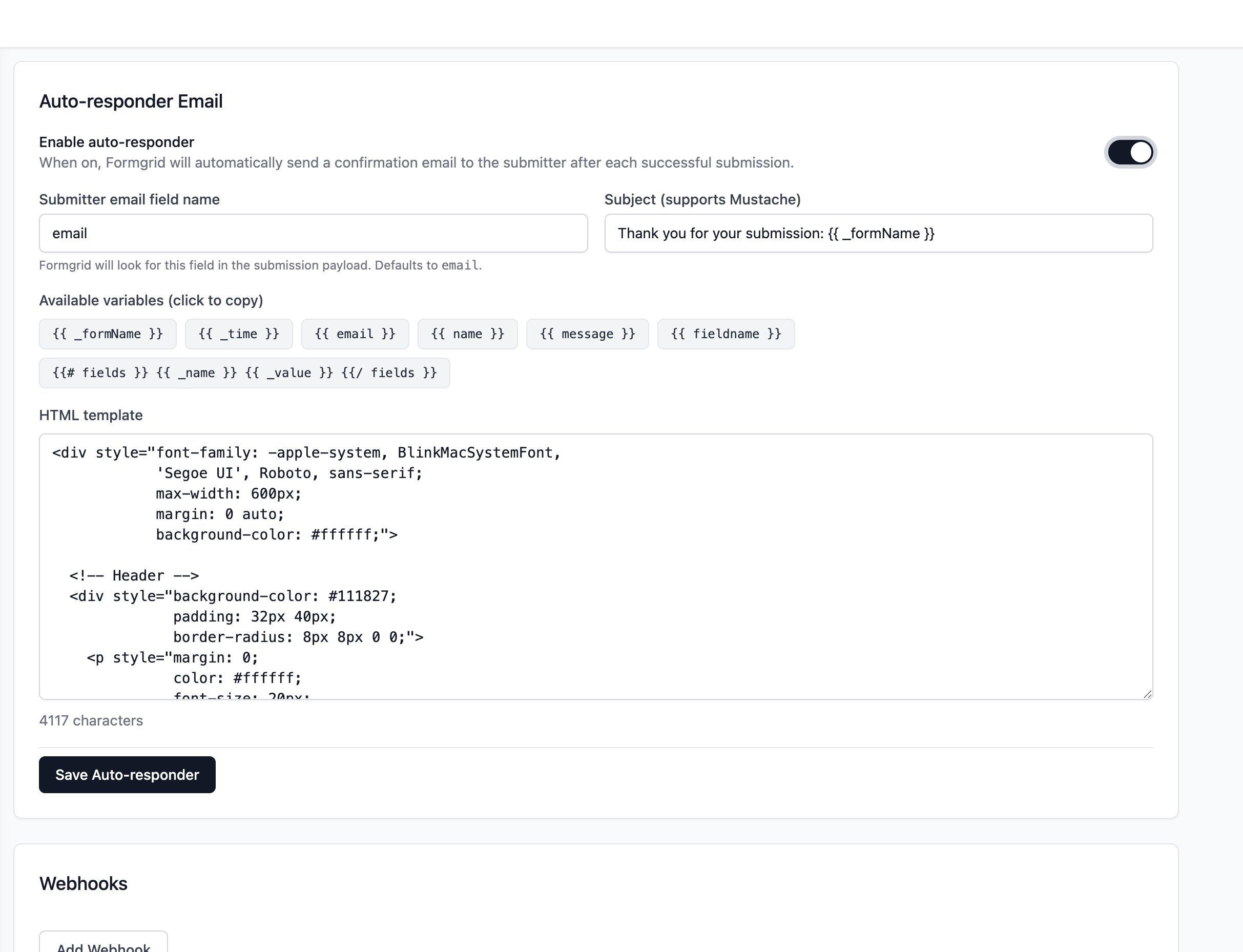
Step 11: Enable the Auto-Responder
Toggle the auto-responder on. Once enabled, Formgrid will automatically send a confirmation email to the email address submitted in your form every time someone fills it in.
The email field in your Webflow form must be named "email" for Formgrid to know where to send the confirmation. If your email field has a different name attribute, update it in your Webflow Designer and republish.
Step 12: Write Your Auto-Responder Email
Set your subject line and write the body of your confirmation email.
Formgrid uses Mustache templating, which lets you personalize the confirmation email with the actual values submitted in the form.
The available variables are:
{{ _formName }}
Name of your form

{{ _time }}
Submission timestamp

{{ fieldName }}
Any field by its exact name attribute

{{# fields }}
Loop through all fields
  {{ _name }}      Field label
  {{ _value }}     Field value
{{/ fields }}
Close the loop
For example if your Webflow form has a field with name="name" you can use {{ name }} in your auto-responder to greet the submitter by their actual name.
A simple confirmation email template that works for any form:
<div style="font-family: sans-serif;
            max-width: 600px;
            margin: 0 auto;
            color: #1f2937;">

  <h2 style="color: #1d4f3d;">
    Thanks for reaching out
  </h2>

  <p>
    Hi {{ name }}, we have received
    your message and will get back
    to you shortly.
  </p>

  <p style="color: #6b7280;">
    Here is a summary of what
    you submitted:
  </p>

  {{# fields }}
  <div style="margin-bottom: 12px;
              border-bottom: 1px solid #f3f4f6;
              padding-bottom: 12px;">
    <p style="margin: 0;
              font-size: 11px;
              color: #9ca3af;
              text-transform: uppercase;
              letter-spacing: 0.05em;">
      {{ _name }}
    </p>
    <p style="margin: 4px 0 0;
              font-size: 14px;
              color: #374151;">
      {{ _value }}
    </p>
  </div>
  {{/ fields }}

  <p style="margin-top: 24px;
            color: #6b7280;
            font-size: 13px;">
    Submitted: {{ _time }}
  </p>

</div>
For a booking or registration form where you want a more specific branded confirmation:
<div style="font-family: sans-serif;
            max-width: 600px;
            margin: 0 auto;
            color: #1f2937;">

  <h2 style="color: #1d4f3d;
             border-bottom: 2px solid #e8f3ee;
             padding-bottom: 10px;">
    Your enquiry has been received
  </h2>

  <p>
    Hi {{ name }},
  </p>

  <p>
    Thank you for getting in touch.
    We have received your enquiry and
    someone from our team will respond
    within 24 hours.
  </p>

  <p>
    If you have any urgent questions
    in the meantime feel free to
    reply directly to this email.
  </p>

  <hr style="border: none;
             border-top: 1px solid #e5e7eb;
             margin: 24px 0;" />

  <p style="font-size: 12px;
            color: #9ca3af;">
    Submitted: {{ _time }}
  </p>

</div>
The variable {{ name }} must match the name attribute of your Webflow form field exactly. If your name field has name="fullName" then use {{ fullName }} in your template.
Step 13: Preview and Save
Click Preview to see exactly how your confirmation email will look with sample data substituted in. When you are happy with it, click Save.
From this point on, every submission through your Webflow form will automatically trigger a confirmation email to the submitter. Every single time. Instantly.
Part Four: Test the Full Flow
Step 14: Submit a Real Test Entry
Visit your live Webflow site and fill in your form using a real email address you have access to. Submit the form.
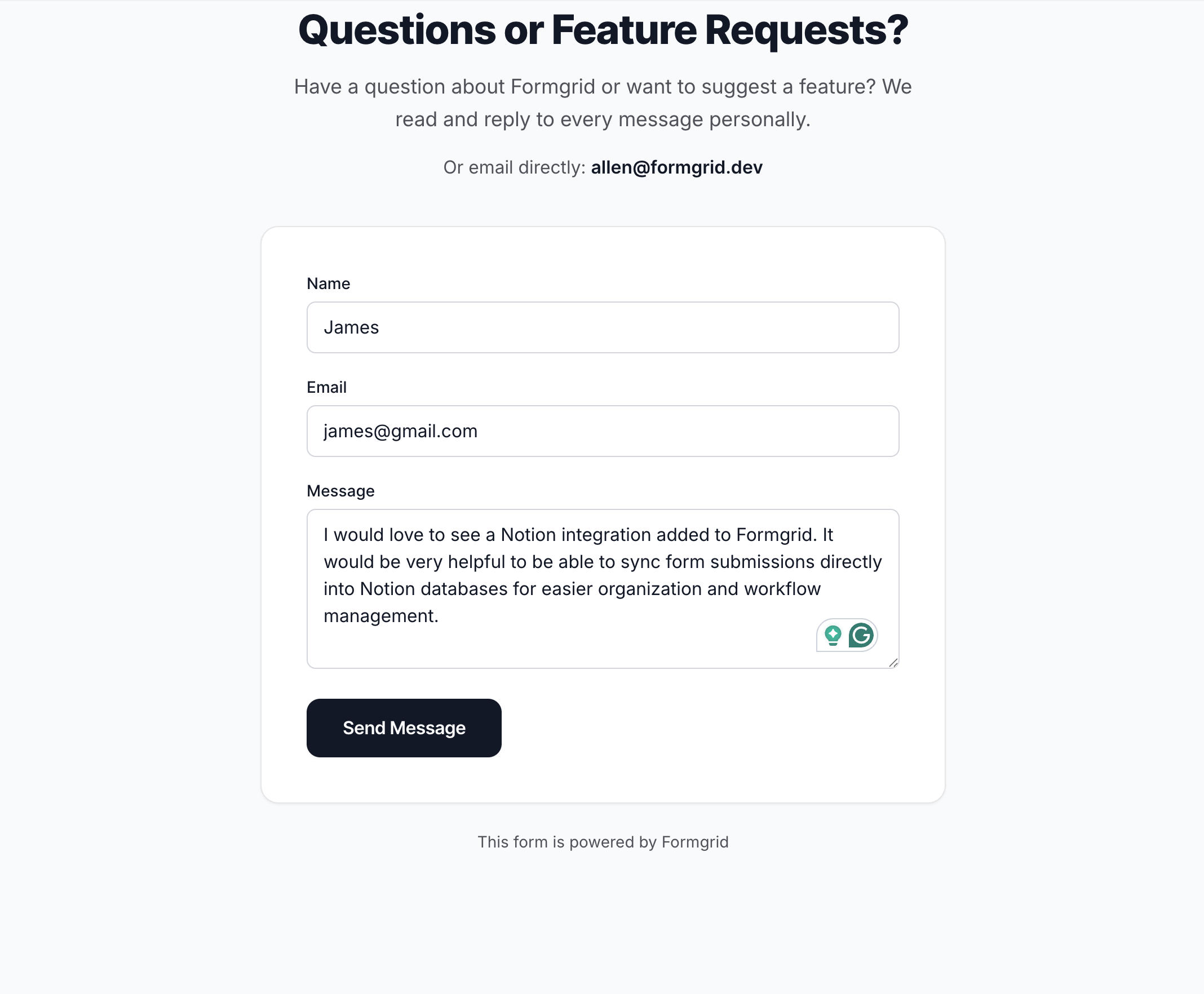
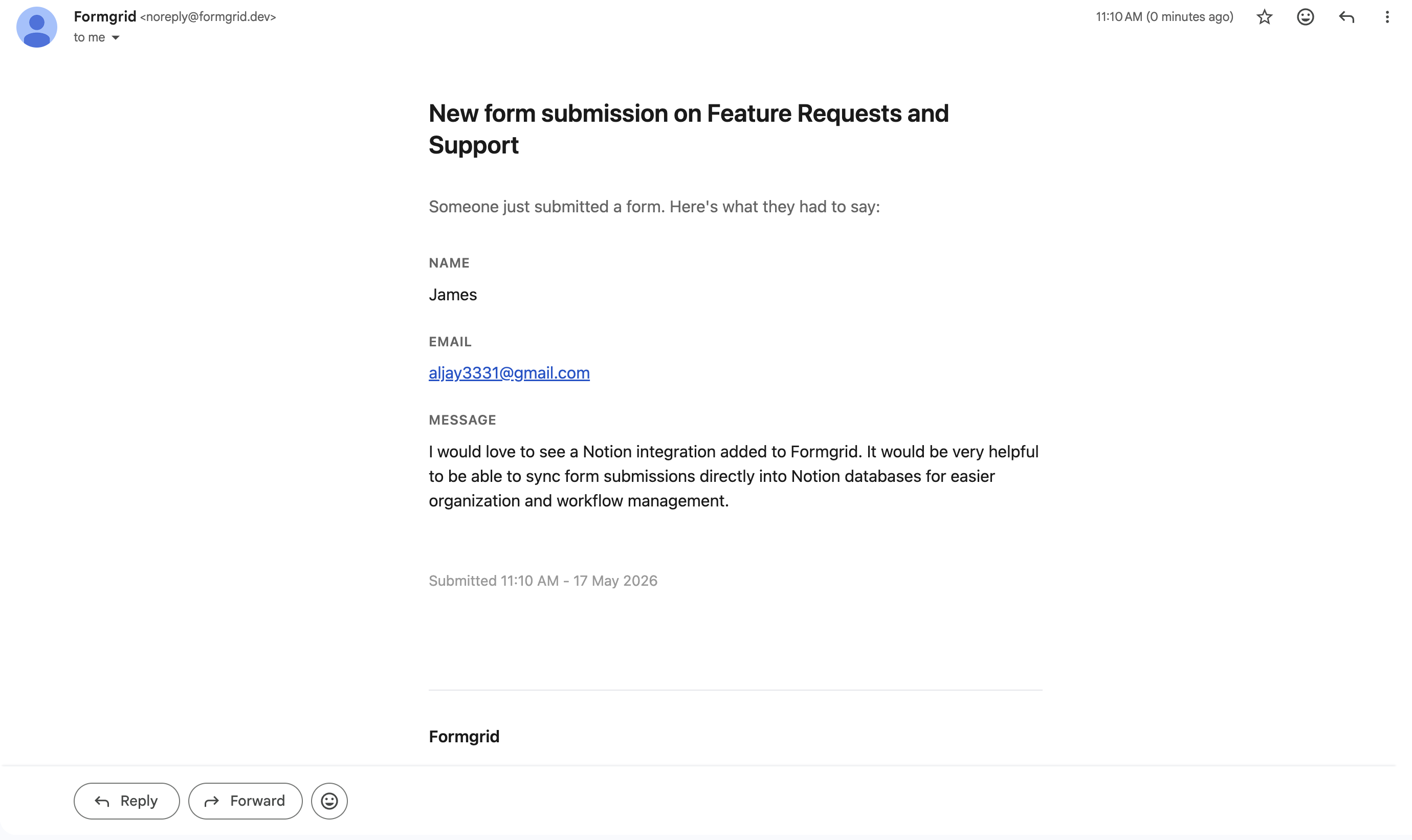
Within a few seconds, you should receive two emails: Email 1: Your notification email Sent to you as the form owner Contains the submission data Email 2: The auto-responder confirmation Sent to the email address you submitted Contains your branded confirmation message
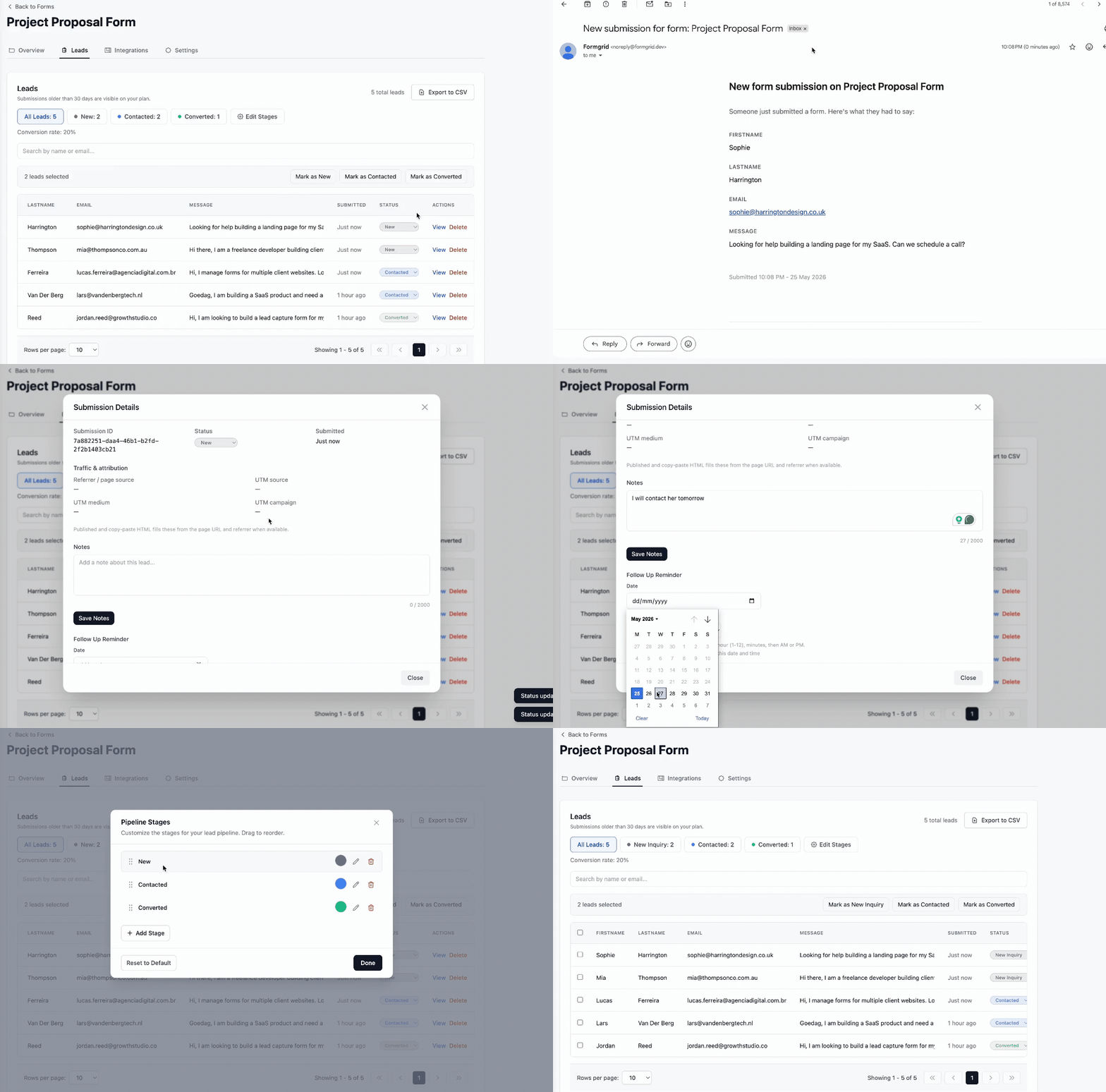
Your Notification Email:
Auto-responder/Confirmation Email:
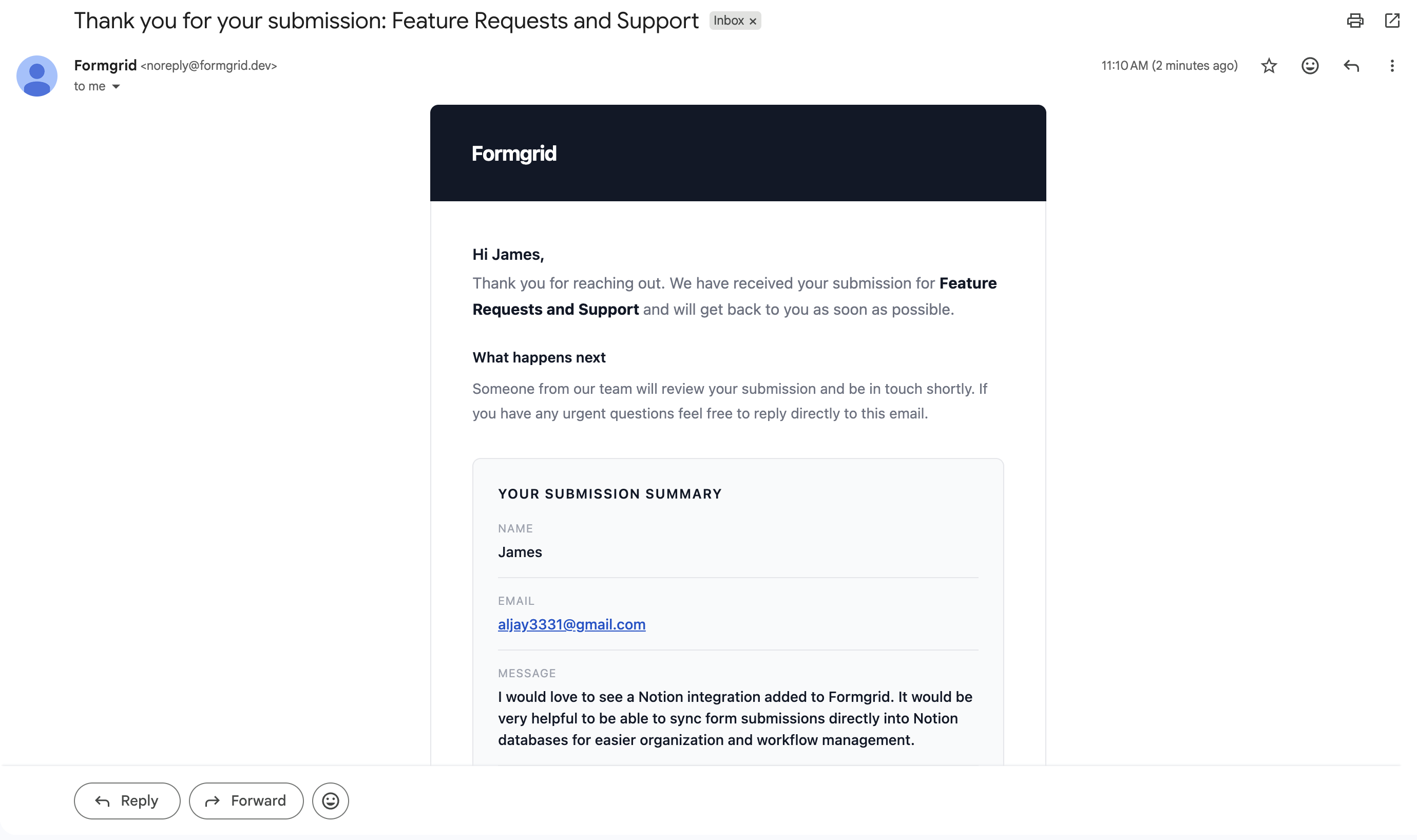
If the auto-responder does not arrive, check your spam folder first. Then confirm in your Formgrid settings that the auto-responder is toggled on and that your form has an "email" field named correctly.
What the Complete Flow Looks Like
Once everything is set up here is exactly what happens every time someone fills in your Webflow form: Visitor fills in your Webflow form and clicks Submit ↓ The browser sends the data directly to your Formgrid endpoint ↓ Formgrid receives and saves the submission to your dashboard ↓ Email notification sent to you and any other configured recipients ↓ Auto-responder confirmation email sent instantly to the submitter ↓ Spam protection runs in the background to filter out bot submissions ↓ If Google Sheets is connected, a new row is added to your spreadsheet
Your submitter gets an instant professional confirmation. You get a clean, organized notification. The submission is saved in your Formgrid dashboard as a tracked lead. All of this happens automatically with no Zapier, no Make, and no MailerSend involved.
Comparing the Two Approaches
Here is the honest comparison between the Webflow + Make + MailerSend workaround and the Formgrid approach:
Webflow + Make + MailerSend: Setup time: 2 to 4 hours Monthly cost: $9 to $46 across three services Dependencies: three separate services that can each break independently Maintenance: occasional scenario failures to debug Delay: slight delay between submission and confirmation email
Formgrid Premium: Setup time: 5 to 10 minutes Monthly cost: $12 per month total Dependencies: one service Maintenance: none Delay: confirmation sent instantly on submission
What Else Is Included in Formgrid Premium
Auto-responder emails are just one part of the Formgrid Premium plan at $12 per month. The full plan includes: 1,000 submissions per month File uploads up to 1GB per file Google Sheets syncs 500 rows per month Lead pipeline CSV export of all submissions Remove Formgrid branding Up to 3 email notification recipients Auto-responder emails to submitters Advanced spam protection
And if you need custom-branded email templates for your notification emails or unlimited Google Sheets sync, the Business plan at $29 per month includes everything in Premium plus: Custom HTML email templates Unlimited Google Sheets sync Webhooks and Zapier integration 15,000 submissions per month Priority support with direct access to the founder
Frequently Asked Questions
Does this replace my Webflow form or modify it?
It replaces where Webflow sends the submission data. Your form still looks and works the same for your visitors. The only change is in the form Action URL setting in your Webflow Designer. Your form design, fields, and styling are completely unchanged.
What if my Webflow form has a field named something other than "email"?
Formgrid looks for a field named "email" to send the auto-responder. If your email field has a different name attribute, update it in your Webflow Designer to "email" and republish your site.
Will my Webflow success message still show after submission?
Yes. Webflow shows its success message based on the form submission event in the browser. Since you are still submitting the same Webflow form, the success message behavior is unchanged.
Can I use this with multiple Webflow forms?
Yes. Create a separate form in your Formgrid dashboard for each Webflow form you want to connect. Each one gets its own endpoint URL and its own auto-responder configuration.
What happens if someone submits the form but enters a fake email?
The auto-responder will attempt to deliver to whatever email was entered. If the email bounces or does not exist, Formgrid handles the bounce gracefully. The submission is still saved to your dashboard, so you never lose the data.
Is Formgrid open source?
Yes. Formgrid is fully open source under the MIT license. You can self-host it for free using Docker if you prefer to run your own instance rather than using the managed version.
Final Thoughts
Webflow builds beautiful websites. But when it comes to sending confirmation emails back to your form submitters, it has never offered a native solution. Webflow Logic was the closest thing to a fix, and it was discontinued in June 2025.
The workaround of connecting Webflow to Make to MailerSend works, but it is complex, expensive, and fragile. Three tools that can each fail independently for a feature that should be a single checkbox.
Formgrid solves this with one endpoint URL change in your Webflow Designer and a few minutes of configuration in your Formgrid dashboard. Every submitter gets an instant professional confirmation. Every submission is saved as a tracked lead in your dashboard. Google Sheets sync is included. No Zapier required.
If you are running a Webflow site and your form submitters are currently getting no confirmation after they submit, this setup will fix that completely in the time it takes to make a coffee.
No credit card required. Auto-responder emails are available on Premium at $12 per month. Upgrade when you are ready.
If you have questions about connecting your specific Webflow form, reply in the comments or email allen@formgrid.dev directly. I read and reply to every message.
Full disclosure: I built Formgrid. Written as honestly as I could. Let me know in the comments if anything looks off or inaccurate.
Comments
Leave a comment